UTS Diploma Degree Documents: Read the Award Before the Logo
A different logo arrangement can make two graduation documents look as though they belong to different eras. However, a search for “UTS diploma degree” needs more than a visual comparison. Start with the institution, the award title and the document’s purpose. A personal digital diploma archive can preserve an existing record, but an image alone cannot establish when a format changed or whether a qualification is genuine.
The Header Is a Clue, Not the Whole Story
The top of a certificate attracts attention first. It identifies the institution visually and shapes the reader’s first impression of the page.
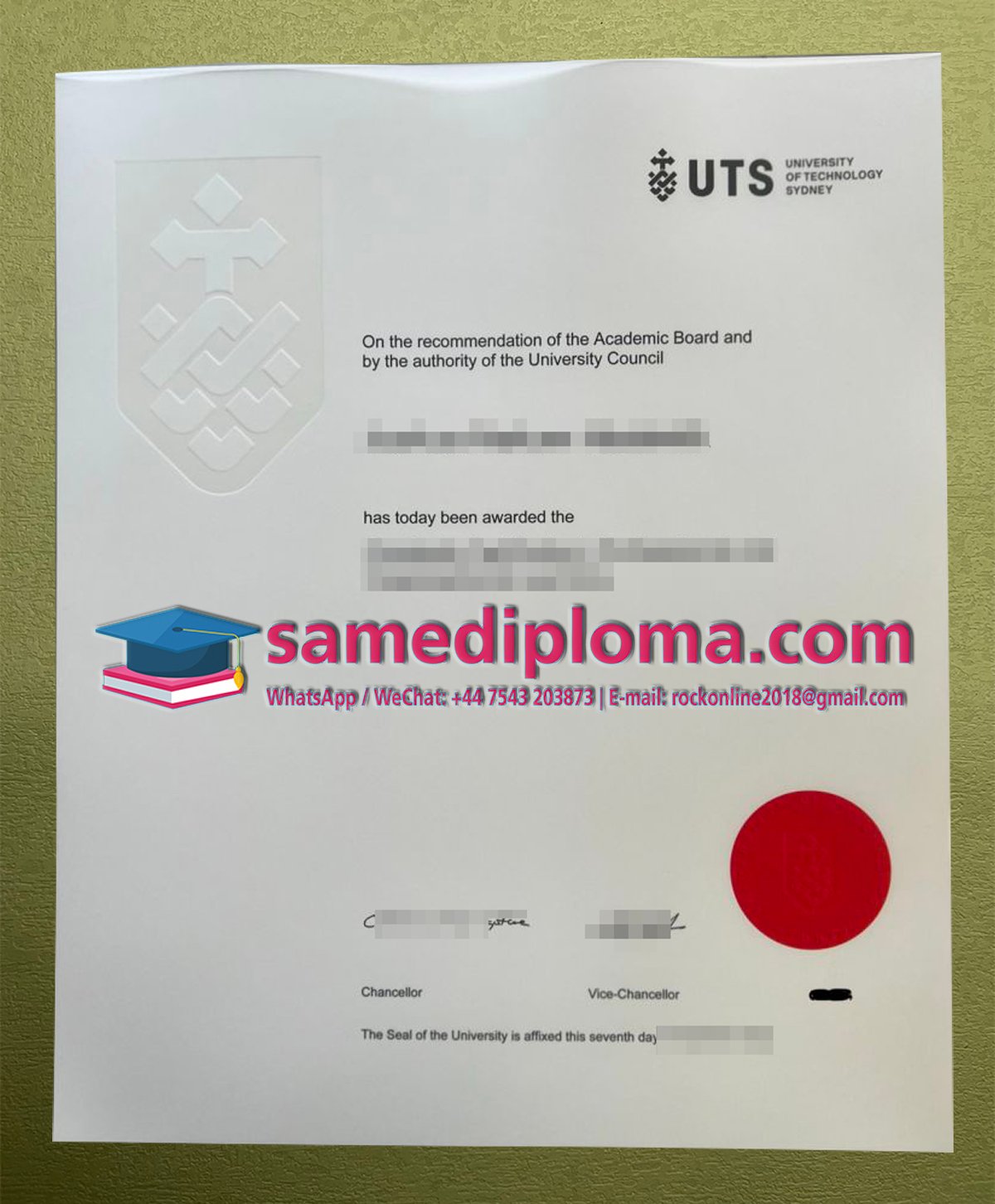
When two samples show different arrangements, it is reasonable to notice that difference. It is less reasonable to assign each layout to a particular graduation year without supporting evidence.
Several dates may surround an image: the award date, the document’s issue date and the date someone uploaded the photograph. These dates describe different events. A filename or website caption does not reliably connect them.
Likewise, “recent version” is an incomplete description. Recent compared with which document, and according to what source?
For an older certificate you own, preserve its existing appearance. If a header looks unfamiliar, ask the issuing institution about the document rather than altering it to resemble a newer online example.
A Useful Design Observation: Where the Reader Looks First
There is a worthwhile design lesson here that does not require copying a university document. A page header establishes a visual hierarchy: it tells the reader where to begin.
In original commemorative artwork, the largest or most prominent element might be the graduate’s name, a photograph or the occasion. Supporting text can then explain the story beneath it.
If every element competes for attention, the page becomes harder to read. A restrained header and clear spacing can make a personal print feel more considered without making it look official.
Choose that hierarchy around the purpose of the artwork. A reunion gift may centre on a shared memory. A graduation tribute may centre on the person and the work they completed.
Use original graphics and a visible non-official label. Do not reproduce institutional signatures, seals or authentication features to make the piece resemble a genuine testamur.
“UTS Diploma of Design” Needs a More Precise Name
The phrase “UTS diploma of design” can lead readers to the wrong conclusion if it appears without explanation.
UTS College offers a Diploma of Design and Architecture. Its current course page describes Design and Architecture streams, practical creative work and a pathway toward further study at UTS.
A UTS College diploma and a UTS bachelor’s degree are different awards. Completing the diploma does not mean that someone has already completed the subsequent university degree.
Use the exact institution and qualification shown in the student’s records. Do not shorten a title until its meaning changes.
For someone comparing courses, the pathway may be the important detail. For someone organising graduation documents, the important detail is which award they actually earned. Both questions deserve an accurate answer, even if an informal search uses the same few words.
Diploma, Degree and Testamur Are Not Interchangeable Labels
In everyday English, “diploma” sometimes describes the paper received at graduation. It can also name a specific qualification, as it does in the UTS College course title.
A degree describes an academic award. A testamur is the formal document confirming an awarded qualification. Confusing the document with the qualification can make an otherwise simple enquiry difficult to resolve.
A transcript answers a different question by presenting academic results. Other graduation documents can provide additional context about the award.
When someone requests proof of study, ask which information they need. Are they checking completion, individual results or the formal award? The most attractive-looking page may not be the page that answers their question.
For your own records, keep document names specific. A folder containing a testamur and transcript should distinguish the two rather than naming every file “UTS diploma.”
Waiting for the Certificate Before a Job Application
There is a legitimate route for students who need evidence before receiving their final graduation paperwork.
The University of Technology Sydney explains that students whose course status is set to passed can request a statement of course completion while awaiting conferral. They can also purchase a transcript showing the relevant completion status.
Conferral is the formal award stage. Completing course requirements and receiving the final document do not necessarily happen on the same day.
If you need evidence before your status reaches that point, contact the UTS Student Centre for guidance. Explain the deadline and what the receiving organisation has requested.
Ask the employer whether the available official evidence meets its requirements. Do not assume that every employer accepts the same document.
A privately created “temporary diploma” cannot establish a university award. The useful solution is to communicate the current academic status accurately and supply the evidence the university can provide.
Digital Records and Personal Scans Serve Different Purposes
UTS provides graduation documents through its official processes, including digital records through My eQuals. Follow the university’s instructions for the documents available to you.
A personal scan is a separate item. It records the paper you hold, but it does not gain official verification merely because you save it as a PDF.
Keep an untouched scan for your private archive. If you need a smaller file for viewing, make a separate version. Do not overwrite the master image during cropping or compression.
Preserve every academic detail. Improving readability should not turn into changing names, grades, award titles or dates.
Before sending a file to another organisation, check its submission requirements. A downloadable copy, a shared digital record and a photograph may receive different treatment. Let the recipient explain the accepted route rather than guessing from the appearance of the file.
If an Older Document Looks Different
An old certificate can raise questions even when its owner knows exactly where it came from. The branding may look unfamiliar, or the name of a faculty may no longer match today’s website.
Those differences call for context, not automatic correction.
Prepare a short enquiry with the institution name, award title and relevant dates. Explain the feature that concerns you without presenting an online sample as the standard every document must match.
For a missing document, ask the issuer about replacement procedures. For an apparent error, request a review of the underlying record.
Do not assume that an official replacement will reproduce every visual detail of an earlier issue. Ask what format the institution currently provides if that matters to you.
Similarly, a newer-looking header does not make a private reconstruction an official replacement. Authority comes from the issuer and its records, rather than a convincing arrangement of graphics.
A Personal Display Does Not Need to Imitate the Certificate
For a graduation keepsake, you have more options than reproducing the original page.
A photograph, a short dedication and a clear reference to the actual achievement can form an original print. If you studied design, your own work may be the most meaningful visual element.
For example, a personal portfolio image could sit beside a few sentences about the project, provided you have permission to use it. This creates a record of the experience without presenting the artwork as a university-issued credential.
Decide whether the piece will appear on a screen, in a private album or inside a frame. Then agree on the dimensions and delivery format.
Keep the non-official description visible in the finished work. A decorative print should not depend on a separate website disclaimer to explain what it is.
Describe the Sample You Actually Have
If you publish a diploma photograph, identify its subject accurately. A UTS College document should not carry a caption claiming that it is a UTS bachelor’s testamur.
Add a year only when the document or another reliable record supports it. If the year is unknown, leave it unconfirmed. Also distinguish a sample image from a university-verified record.
Remove personal identifiers from a separate public copy, and retain the original privately. Avoid using a caption to make claims that the photograph cannot support.
The logo arrangement can be an interesting observation. The more useful questions concern the issuer, qualification and document purpose. Resolve those first, and you can preserve an old record, request appropriate evidence or create a personal tribute without confusing one task with another.