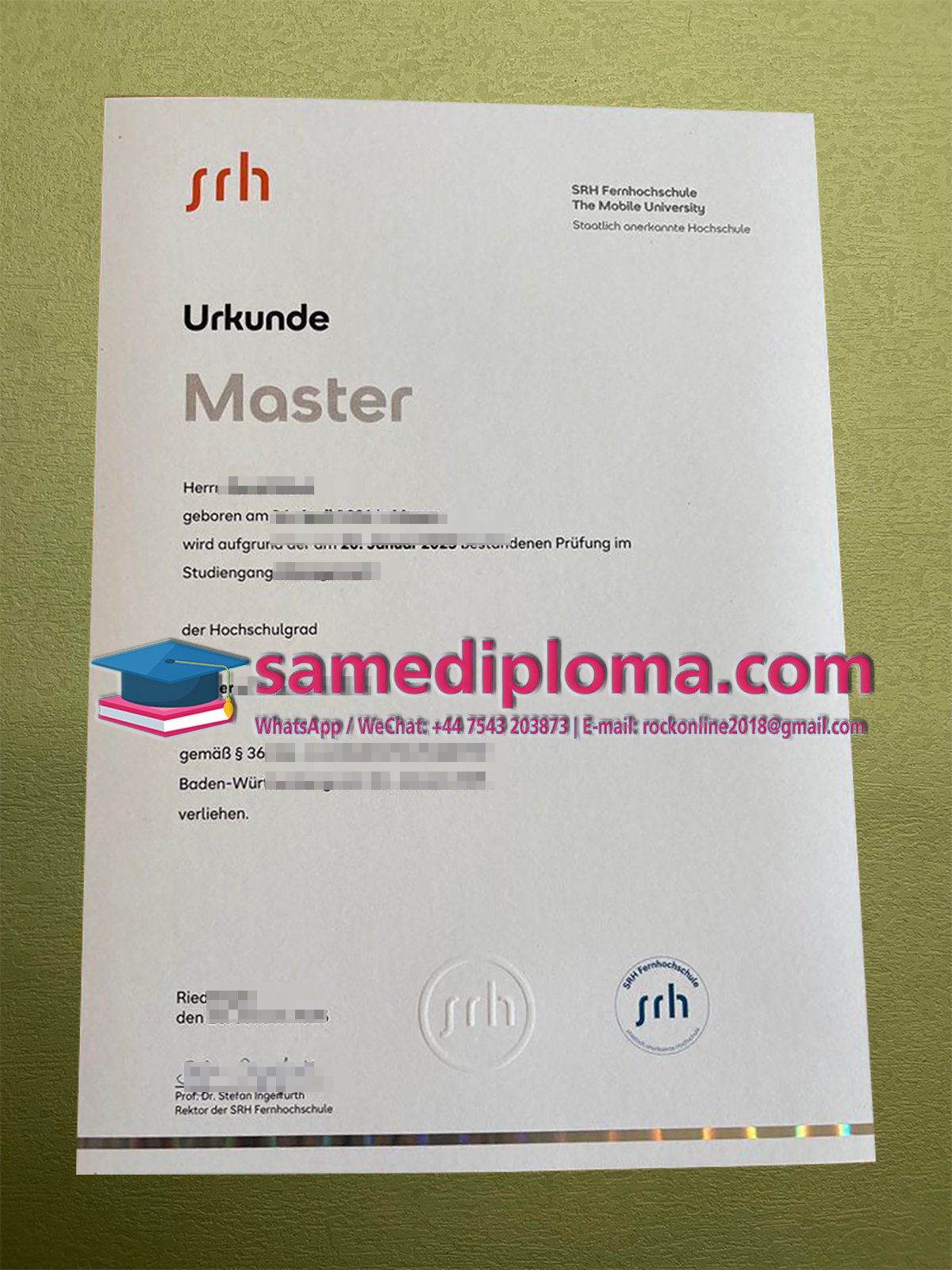
Understanding Your SRH Fernhochschule Urkunde After Distance Study
Finishing a course and finding the right document are two separate tasks. If you are looking for an SRH Fernhochschule Urkunde, first establish what you completed and what you need to show. A search for a replacement Urkunde might concern a degree award, while another enquiry concerns a shorter university certificate. Similar wording can hide a substantial difference. The quickest useful step is to identify the record before deciding how to obtain or preserve it.
A University Built Around Flexible Study
SRH Fernhochschule – The Mobile University traces its origins to the Kolping-Fachhochschule für Wirtschaft, founded on 18 June 1996. Its home base is Riedlingen, in Baden-Württemberg.
The institution’s distance-learning focus allows study to fit around different circumstances. Its own anniversary account describes learners combining education with employment, family responsibilities and other commitments.
That context gives a graduation document personal meaning. It may represent progress made over evenings and weekends rather than a conventional campus routine. However, the learning format and the qualification title answer different questions.
Distance learning describes how someone studies. The award title describes what they have completed. When explaining your education, keep both details accurate instead of treating “online” as a qualification category.
The Mobile University Name Needs Context
“The Mobile University” forms part of SRH Fernhochschule’s public identity. It does not mean that any certificate carrying the wider SRH name belongs to the same institution.
Use the full institution name when making an enquiry. If an older document uses different wording, quote that wording as it appears. Also include the programme and approximate study period so the university can understand the context.
Avoid choosing a document reference simply because its logo looks familiar. A shared organisational name does not establish that two programmes use the same records or procedures.
For a personal archive, a short explanatory note can connect an earlier name with your own study history. Keep that note outside the academic document itself. This preserves the original wording while making your folder easier to navigate later.
A Degree and a Hochschulzertifikat Are Different Achievements
SRH Fernhochschule offers degree programmes alongside university certificate courses. The certificate offering provides focused further education across a range of subjects.
A Hochschulzertifikat can document worthwhile learning. However, completing a certificate course does not, by itself, establish that someone holds a bachelor’s or master’s degree.
The distinction matters when naming files, describing qualifications or preparing an application. Use the actual award title. Do not turn a course certificate into a “degree certificate” because that phrase sounds more familiar in English.
Likewise, the word “Urkunde” alone does not tell an unfamiliar reader everything about the qualification. Read the full wording and consider it alongside the programme information.
If you want to use prior certificate study toward another programme, ask the university about the applicable recognition process. Do not assume that a certificate automatically replaces a particular part of a degree.
Work Backwards from the Reader’s Question
Before requesting paperwork, ask what the recipient needs to establish.
Someone checking whether you completed an award may need different evidence from someone assessing individual modules. A personal keepsake serves another purpose entirely.
Consider these three situations:
- You need confirmation of the qualification you earned.
- You need information about subjects, results or study content.
- You want a private record or commemorative piece.
These situations may involve different documents. Sending a visually impressive page does not help if it fails to answer the actual question.
For an application, read the requirements carefully and ask the receiving organisation about unclear terminology. An English description such as “diploma” may be too broad to identify the exact record.
If translation is necessary, check the required format before paying for it. A translation explains an existing document; it does not change the award or add academic rights.
When Something Is Missing or Incorrect
If you cannot find an academic document, contact the university’s appropriate student or examination service. Describe what is missing and ask which procedure applies.
Prepare your name during enrolment, programme title, approximate completion date and student number if available. This information can help explain the enquiry, but follow the university’s own instructions about what to submit.
Do not assume that a current student procedure also applies to a former student. Similarly, a procedure for one institution should not become a promise about another.
If you spot an error, identify the exact entry and provide the relevant evidence through the official channel. A correction requires the institution to review its records. Privately editing a name, grade or qualification does not correct the university’s record.
Ask about the current replacement fee and expected handling time before relying on a deadline. If the request is urgent, explain why and ask what documentation the university can provide.
Keeping a Useful Digital Study Archive
Distance study can leave you with many files: course notes, assignment drafts, feedback and final documents. Keeping everything in one folder makes important records surprisingly difficult to find.
Create a clear distinction between academic records and your own working material. Use separate folders for final documents, course information and personal notes.
For a paper document, retain a complete scan before making any viewing adjustments. Keep that master file unchanged. A separate copy can handle rotation, sensible cropping or privacy masking.
Give files descriptive names that identify the document and programme. Add a date only when you know what that date represents. Download date, completion date and issue date are not automatically the same.
If you share a sample publicly, conceal personal identifiers in a separate version. Your private archive and a public image have different purposes.
A scan may be useful for your records, but it does not automatically become an institution-issued digital credential. Check what the recipient accepts before using it in an application.
A Commemorative Design Can Tell a Different Story
Academic paperwork records an award. Personal artwork can acknowledge the effort around it.
For someone who studied alongside a job or family commitments, a keepsake might include a dedication or a photograph from that period. An original layout gives those details room without pretending to be another university document.
Make the non-official purpose visible on the work itself. Avoid reproducing institutional signatures, seals or verification features. If the piece uses a fictional award, make its invented nature equally clear.
A digital-only design can suit a private album or celebration. A paper print may suit a gift. Confirm the format, size and intended use before approving the artwork, and keep factual references to real achievements accurate.
You do not need a replica academic record to recognise persistence. A personal sentence about what the achievement meant may carry more significance than another formal-looking page.
A More Useful Starting Point Than “Fastest”
An SRH Fernhochschule Urkunde enquiry becomes easier when it begins with the right description: the institution, the programme, the document and its intended use.
For official evidence, follow the university’s document process. For personal storage, preserve the existing record accurately. For a keepsake, choose clearly non-official artwork that tells the story you want to remember.
That first distinction prevents a lot of unnecessary work. The document you need should reflect the learning you actually completed—and answer the question that brought you looking for it.