University of Akron Degree: A Closer Look at the Gold-Foil Details
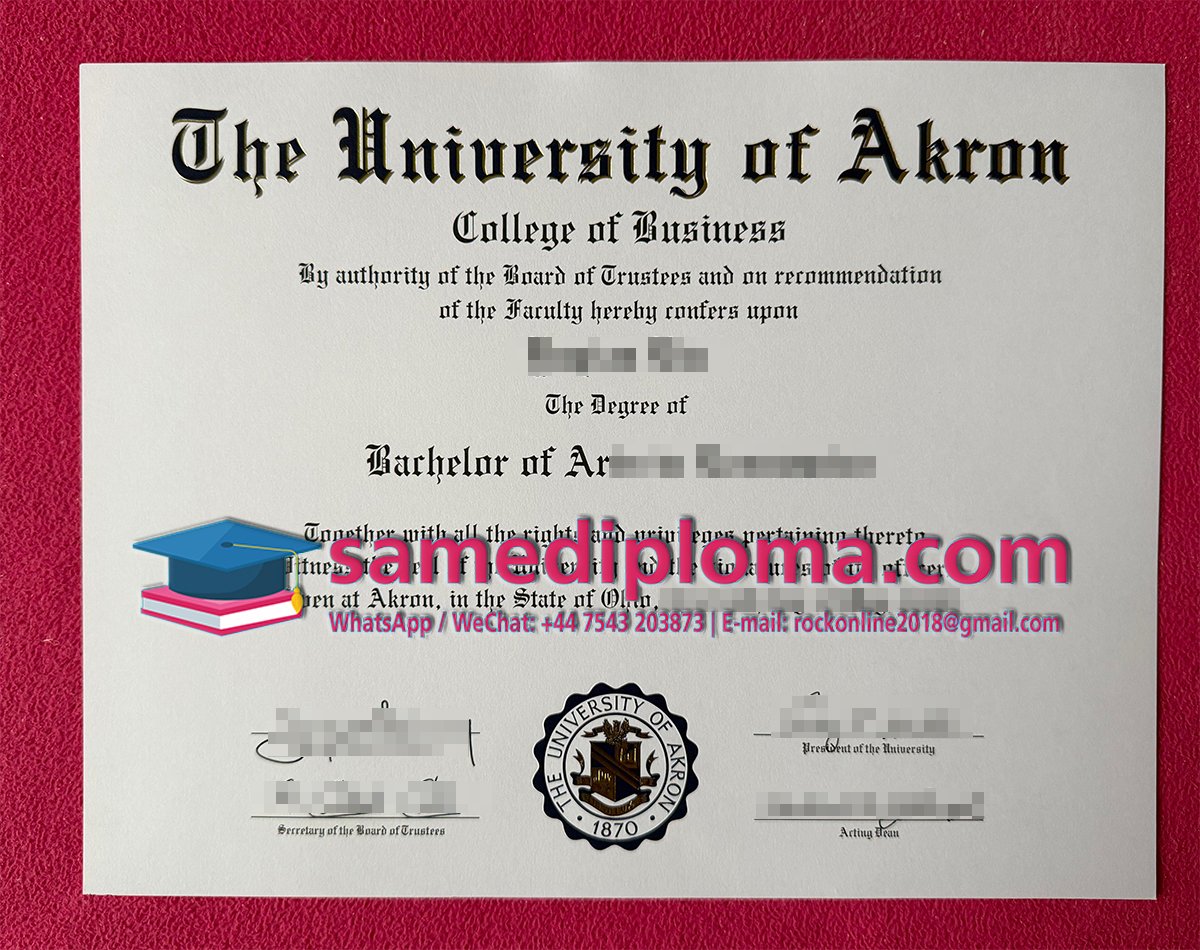
A clear photograph can give a University of Akron degree sample more substance than a generic school description. The example discussed here has two gold-foil features: the university name at the top and the emblem near the bottom. For another American university reference, our Western Michigan University diploma guide discusses historical names and graduation records. This Akron article takes a narrower approach, focusing on the appearance of one sample.
Two Details That Give the Page Its Character
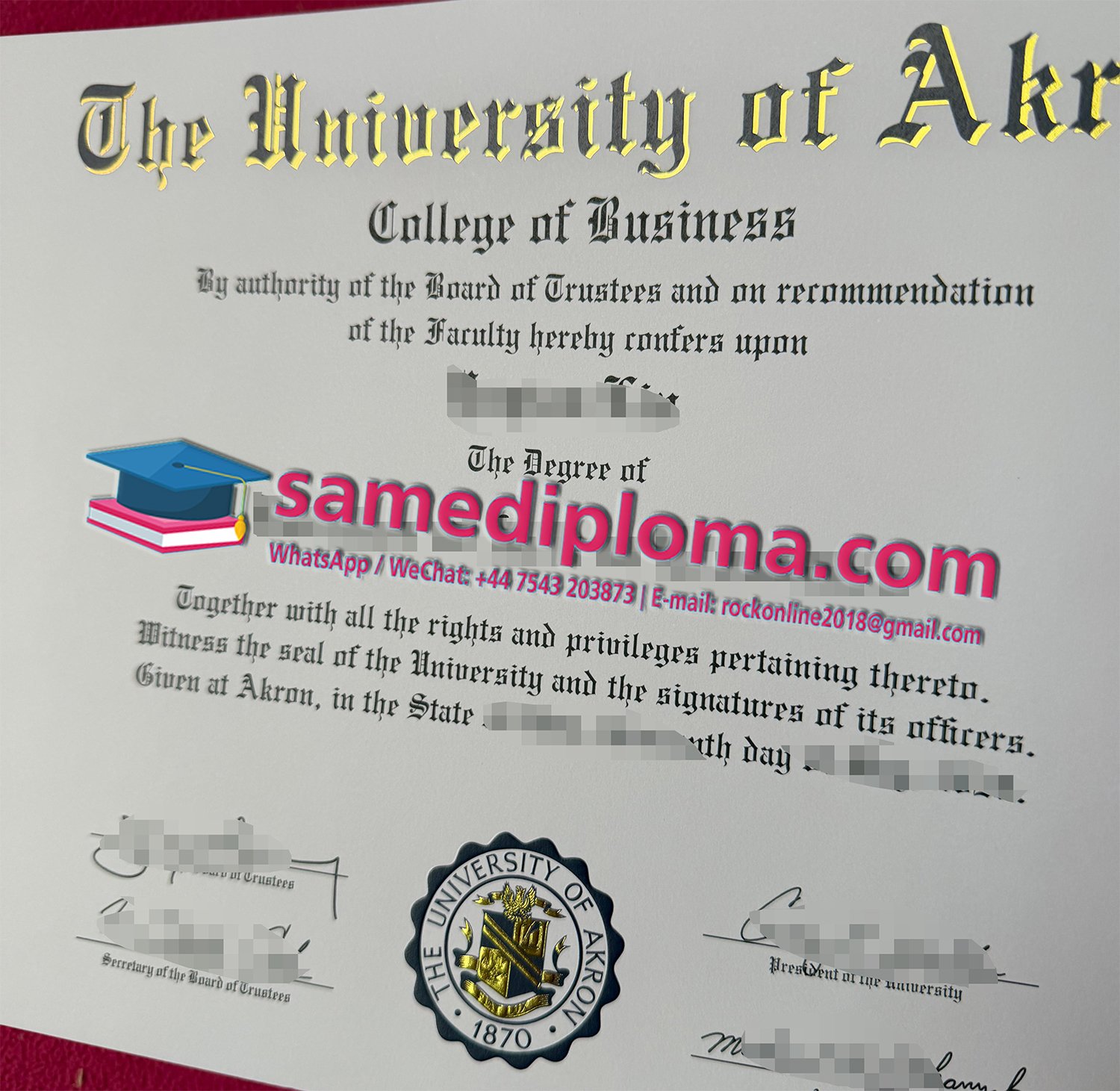
The university name establishes the identity of the document. In this sample, its gold-foil finish adds a reflective quality that ordinary text does not have.
The lower emblem creates a second point of visual interest. Together, these two areas give the page a relationship between its opening and closing elements.
That is a design observation, not a claim about every University of Akron diploma. Without a dated collection, one photograph cannot establish which years used the same treatment.
The photograph and its description work best together. The image shows the page; the text directs attention to the two reflective areas. A reader can then understand why a flat digital preview may give a different impression from the physical sample.
Why a Clearer Photograph Helps
Reflective details can disappear in a small or heavily compressed image. A gold surface may look pale in one photograph and much darker in another.
A clearer image helps readers understand that the lettering has a different surface appearance from the surrounding text. However, it does not turn the photograph into a complete technical record of the document.
The distinction between colour and finish matters. Something can look gold because of its colour, while a metallic surface also responds to light. Describing the sample’s finish is more informative than repeatedly calling it “high quality.”
Avoid treating a bright reflection as proof of a particular material or process. Photographs show appearance under specific conditions; they do not answer every question about how an object was made.
Keep the Whole Document in Context
A close-up draws attention to a detail, but a full-page image explains where that detail belongs. Used together, the two views can support a more understandable description.
For a public sample page, identify what each photograph shows. A general view can introduce the document, while the detail image can focus on the school-name lettering or lower emblem.
Do not attach an unconfirmed year to either image. Likewise, a close-up should not imply that every award level or historical version uses the same arrangement.
Keep personal identifiers out of public images. Save a separate publication copy so privacy edits do not overwrite the private original.
The aim is a clear record of the sample, rather than an image that appears to prove more than it actually shows.
The University Behind the Name
The University of Akron has an established engineering and polymer-science focus. Its College of Engineering and Polymer Science connects those subjects with practical learning, research and design work.
That background provides useful context for a graduation document. It is more relevant than a long list of changing enrolment figures or unrelated institutions.
However, a university’s academic reputation does not authenticate a photograph carrying its name. The physical presentation and the underlying academic record are different subjects.
If you need confirmation of an award, use the university’s official channels. A photograph can document an object’s appearance, but it cannot replace the institution’s records.
A Digital Image Does Not Reproduce a Physical Finish
A personal scan or photograph can preserve the look of a diploma for reference. It cannot carry the physical properties of the original paper or foil.
This matters when viewing the file on different screens or making an ordinary print. The image records reflected light; it does not transfer the reflective material itself.
Keep the original file alongside any smaller viewing copies. If you adjust an image for readability, preserve the academic wording and avoid changing names, qualifications or dates.
For someone who wants graduation artwork, an original commemorative layout offers another option. It can combine a photograph, dedication and accurate reference to an achievement. Make its non-official purpose visible and avoid copying institutional authentication features.
Give the Photograph an Accurate Description
A useful caption names the document and the detail under discussion. It does not need a string of purchasing keywords.
For this sample, the central observation is straightforward: gold foil appears in the upper university name and the lower emblem. Further claims about dates, materials or official versions would need separate evidence.
If you need a replacement for a lost diploma, ask the university about its current process. If you want a private visual record, preserve the document you already hold.
The value of this University of Akron diploma photograph lies in its specific detail. Two reflective elements give readers something concrete to examine, while a careful description keeps the observation honest.