A Closer Look at a University of Niš Diploma Sample
Buy a Fake University of Niš degree diploma. A University of Niš degree diploma offers more to discuss than the wording of an academic award. Language, page layout and surface details all contribute to the document’s appearance. As with the visual comparisons in our Romania diploma sample guide, a useful description starts with the particular example and its context.
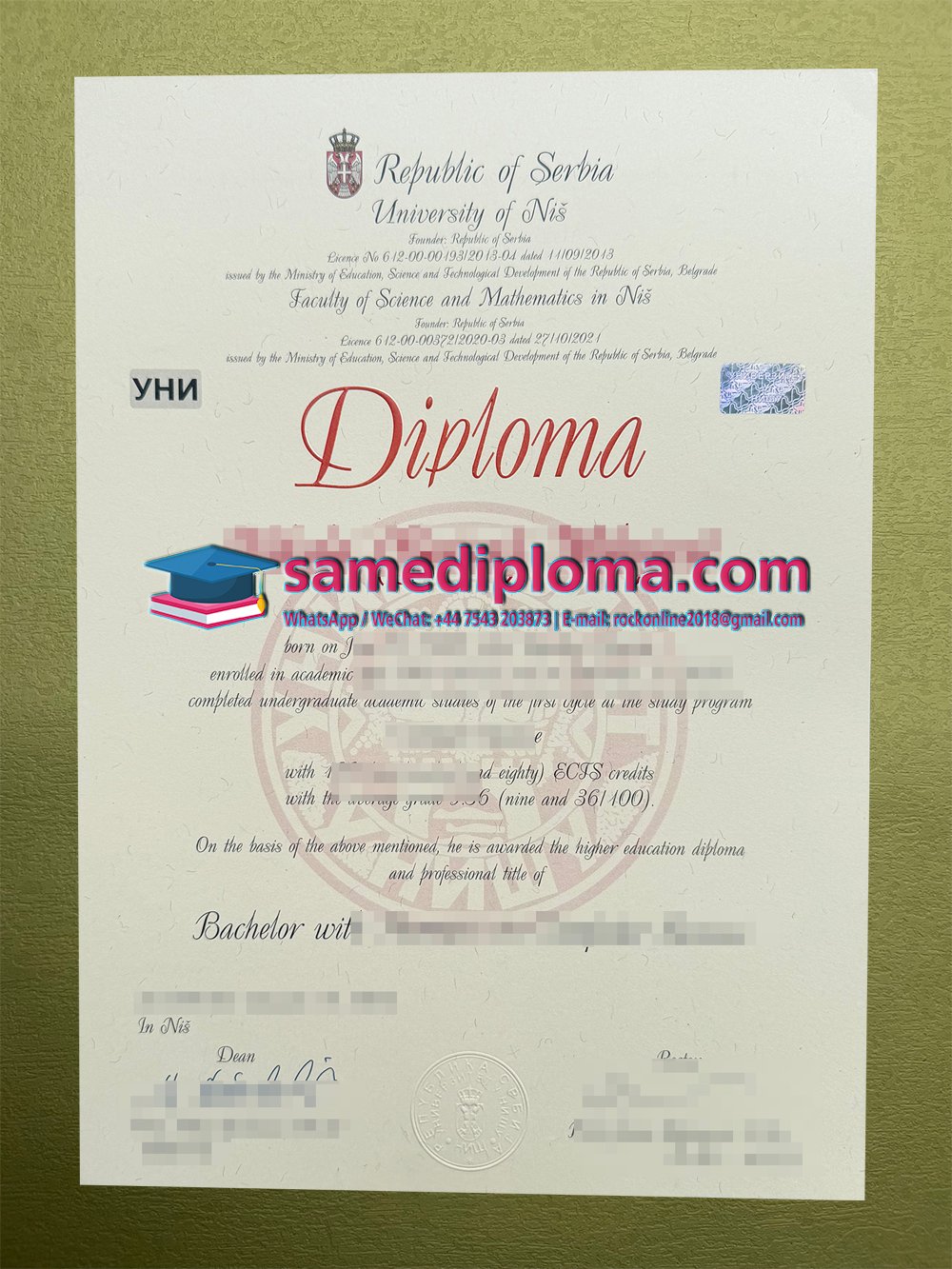
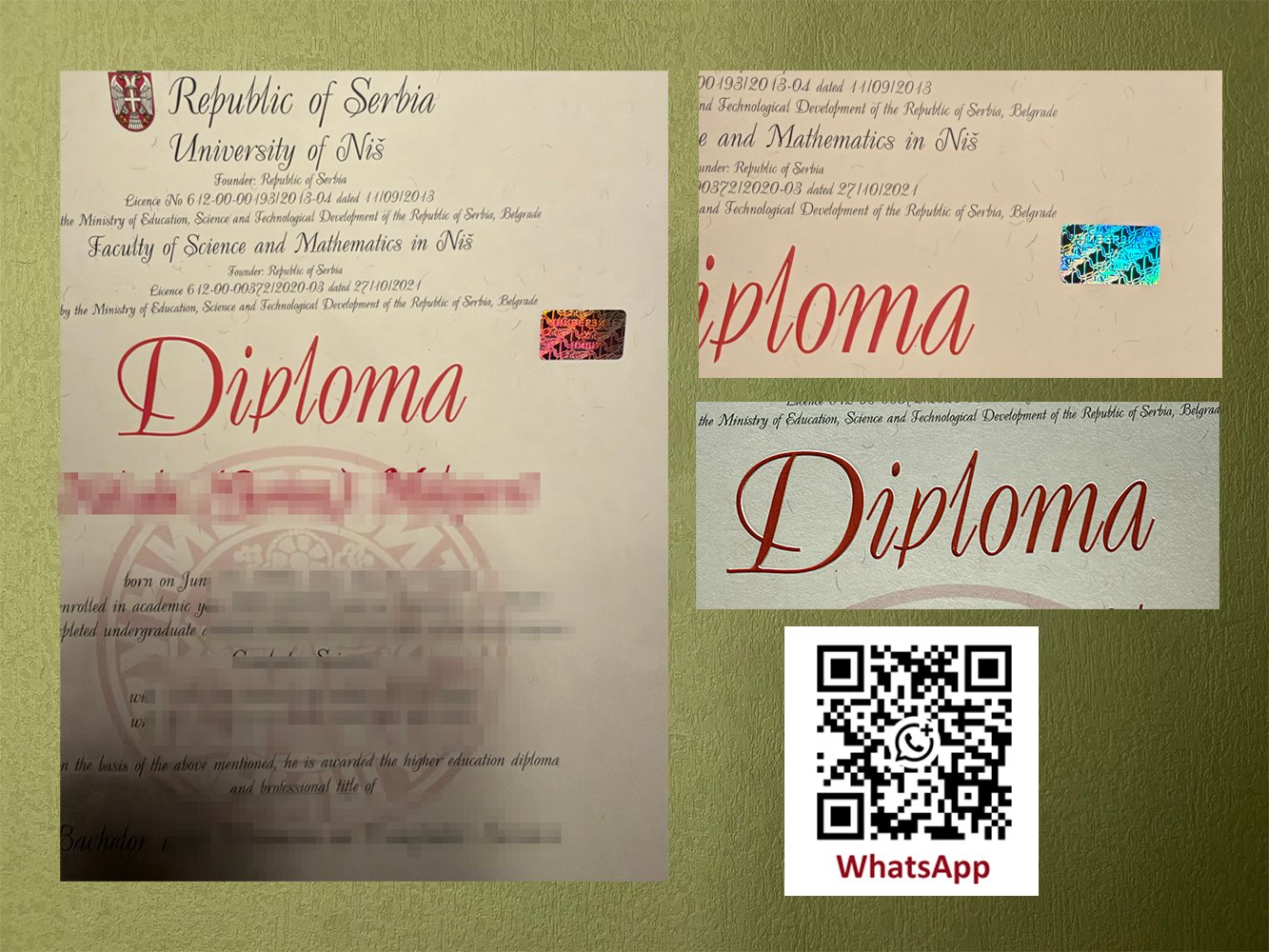
The reference material described for this article includes English and Serbian versions, raised-looking headings, a lower university seal and a holographic feature. Two photographs serve different purposes. A full view establishes the overall arrangement, while a detail view draws attention to features that can disappear in a small preview.
English and Serbian Versions Deserve Separate Attention
The University of Niš is a public university in Serbia whose history as an independent university began in 1965. Its Serbian name, Универзитет у Нишу, naturally gives its documents a different visual character from an English-language version.
In the sample material described here, both English and Serbian wording form part of the discussion. The heading “Diploma” and its Serbian counterpart are particularly noticeable. Different scripts change the rhythm of a page, even where the documents communicate corresponding academic information.
English-language documents also have an official context. The university’s Faculty of Medicine explains that diplomas and diploma supplements can also be issued in English under the applicable institutional rules. Readers should check their own faculty’s arrangements for the documents they need. Diploma and diploma supplement information
A sample pair provides a useful reference for comparing languages. To understand whether an individual graduate receives two separate documents or a bilingual document, confirm the arrangement for the relevant programme and year.
What the Complete Photograph Contributes
The full photograph gives the reader a sense of proportion. It allows the eye to move from the heading through the award wording and towards the lower section.
That relationship matters when discussing a personal display copy. A document may contain considerable text while still leaving enough space around its main elements. The complete view lets readers judge the composition as a whole.
It also provides context for the second photograph. A close-up of an isolated detail can be difficult to place. Showing the complete document first helps readers understand which part of the page they are viewing next.
For an article caption, keep the description straightforward. Identify the university, document type and view. Add a language or year only when the photograph or supporting information confirms it.
The Raised Appearance of the Diploma Heading
The heading is one of the distinguishing observations in the supplied description. The English “Diploma” and corresponding Serbian wording have a raised appearance.
This gives the lettering a physical quality that a flat thumbnail may not convey. A detail photograph can help readers notice the relationship between the letter shapes, their highlights and the surrounding paper.
However, a photograph provides limited evidence about the production method. It makes sense to describe the visible effect as raised lettering unless the material or manufacturer establishes a more precise term.
This wording also keeps the article focused on what readers can observe. The important point for the sample discussion is the visual texture of the heading and how it contributes to the document’s presentation.
The Lower Seal and Holographic Feature
The described sample also includes an embossed university seal near the bottom. Its impression adds another surface detail to the lower section.
Alongside it, the holographic feature provides a reflective element. A full-page photograph may show its position, while a closer image may reveal more of its visible character.
These features give the detail photograph a clear purpose. It can document aspects of the sample that become difficult to distinguish when the whole page fits into a small screen.
Their presence in a photograph does not establish the authenticity of an academic award. For academic or employment checks, confirmation needs to come through the issuing institution and the relevant records.
The observations here apply to the described example. Other years, faculties or award types require their own supporting references before making comparisons.
Existing Design Files and a Personal Display Copy
An existing design file can be a starting point for organising a clearly labelled, non-official display piece. It can help keep text readable and arrange explanatory captions around an authorised image of a personal document.
The intended use should guide the result. A personal archive may benefit from an accurate digital record of an existing certificate. A commemorative display can combine a document image with a graduation photograph or a short account of the graduate’s studies.
For a non-official display copy, include a visible label that explains its status. Keep the graduate’s actual academic information accurate, and use distinct decorative elements rather than reproducing authentication features.
If the original has been lost and an official replacement is necessary, contact the awarding faculty or university. Ask what information it needs to locate the record and which document formats it can provide.
Giving Each Photograph Its Own Role
The two-image approach works best when each photograph contributes something specific. Let the complete view introduce the document and its language context. Then use the close-up to accompany the discussion of the raised-looking heading, lower seal or holographic feature.
Match the caption to the actual crop. If a detail photograph contains only the lower section, its description should identify the features visible there. A heading outside the frame belongs in a separate image description.
Before publishing, review both images for personal information. Conceal names, student identifiers and other private details where necessary. Keep the sample’s language, year and document type consistent between the article and its captions.
A reader can then move from the complete page to the smaller details with a clear understanding of what each image contributes. That makes the University of Niš diploma sample useful as a visual reference for language, layout and personal record keeping.