What Does an Austrian Ingenieur Qualification Actually Demonstrate?
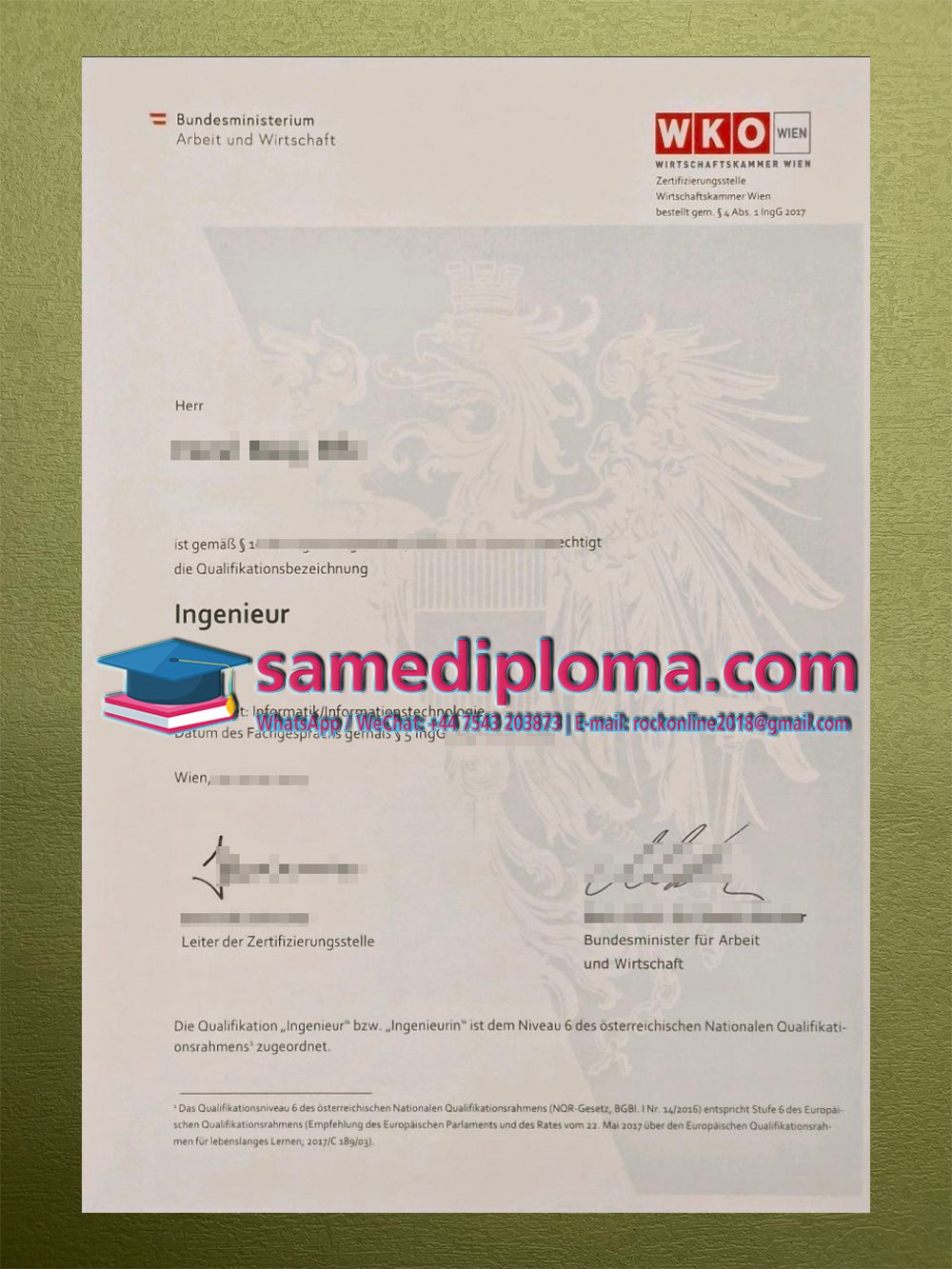
The search phrase “Bundesministerium Arbeit und Wirtschaft Ingenieur” points towards Austria’s engineering qualification system. It raises a useful question: what does the certificate establish about its holder? As with the distinctions discussed in our Engineering Council certificate guide, understanding the qualification matters more than recognising a document’s heading. Austria’s Ingenieur designation has its own requirements and should not be confused with British professional registration.
Why the Ministry Name Needs Context
Bundesministerium für Arbeit und Wirtschaft means Federal Ministry of Labour and Economy. However, Austria reorganised its ministries in 2025. From April 2025, the economic portfolio came under the Federal Ministry of Economy, Energy and Tourism, or BMWET. Its website now provides the government’s information on Ingenieur qualifications.
Consequently, an older ministry name on historical material needs context. Check the date, issuing organisation and qualification wording together. A ministry heading alone cannot establish a particular document’s authenticity. Anyone checking an individual award should contact the responsible certification body.
The government describes Ingenieur as a qualification combining higher technical education with subsequent professional practice. Designated certification bodies assess applicants under the Ingenieurgesetz 2017 framework. The system recognises professional learning that develops through technical work after initial education.
Level 6 Does Not Mean a Bachelor’s Degree
The Ingenieur qualification sits at level 6 of Austria’s National Qualifications Framework, commonly abbreviated to NQR. Bachelor’s degrees occupy the same level. Nevertheless, they remain different qualifications. The Austrian Economic Chambers’ certification guidance explicitly states that acquiring Ingenieur status does not award a bachelor’s title.
This distinction matters when describing the qualification on a CV. Use the designation you actually earned. If another institution asks for a bachelor’s degree, explain your qualification accurately and ask how it evaluates that route. A shared framework level does not answer every admissions or recruitment question.
Think of the framework as a way to describe the complexity of learning and competence. It helps organisations compare achievements from different pathways. It does not make the educational histories, course content or documents identical.
Where Its Professional Value Comes From
For an experienced technical worker, the certificate can make an established body of competence easier to communicate. The government places it within a defined qualification framework. That provides a reference point beyond a job title or a general claim of experience.
Consider an illustrative applicant who helps plan technical projects and takes responsibility for implementation decisions. Their employment history describes where they worked. A professional qualification provides another piece of evidence about their development. Employers still need to consider the person’s actual responsibilities, results and suitability for the role.
My assessment is that its value is strongest where an employer understands the Austrian system or needs clearly described qualification levels. It cannot guarantee a promotion, a salary increase or acceptance in every country. Applicants should connect the qualification to a specific career objective before investing in the process.
A practical starting point is to examine several relevant vacancies. Note how employers describe technical responsibility and which qualifications they request. Then discuss the designation with your current manager or a prospective employer. That conversation provides a more useful reference than general promises of career success.
Do Many People Apply?
Published figures show an established application stream. In a January 2023 statement, the Lower Austrian Economic Chamber reported 11,422 applications across the provincial WKO certification offices. That total covered May 2017 through December 2022. Lower Austria accounted for 2,381 of those applications.
A more recent WKO regional report recorded 259 applications in Lower Austria during the first half of 2025. This offers evidence of continuing interest, although it covers one region and six months.
These figures count applications, not necessarily distinct successful applicants or certificates awarded. They also describe different periods and geographical scopes. The older nationwide WKO figure does not cover every certification provider. Therefore, it would be misleading to present either number as Austria’s latest annual total.
The measured conclusion is that this is an established specialist qualification with continuing demand. The available figures do not justify calling it a mass-market certificate or claiming a national surge in applications.
What Applicants Need to Demonstrate
For the usual HTL route, WKO specifies a completed higher technical school qualification followed by at least three years of relevant professional practice. Other educational routes have different conditions. Applicants submit evidence of education and experience, together with a description of their own technical work.
After the formal checks, two experts assess the relevant competence through a professional discussion. Preparing useful examples therefore matters. Describe decisions you made, the technical challenges involved and your own responsibility. A list of job titles alone gives assessors much less information.
Before applying, identify the certification body that handles your circumstances and check its current guidance. For an existing certificate, direct replacement or verification questions to the responsible issuer. The professional value belongs to the assessed qualification and its holder’s competence; a privately recreated document cannot confer that status.