Katholische Universität Urkunde and the Story Behind the University Name
An older Katholische Universität Urkunde can raise a surprisingly practical question. Why does the university name look different from the name graduates use today? Before requesting another document, check the award date and the institution’s wording. KU’s development across Eichstätt and Ingolstadt gives that question a historical context.
Graduates may also need different documents for different purposes. A degree certificate, an academic record and a transcript each provide particular information. Identifying the document you need helps you prepare a clearer request and avoid unnecessary correspondence.
Why Older KU Documents May Carry a Different University Name
The university reached an important milestone in 1980, when the institution in Eichstätt became a Catholic university. However, its educational roots extend much further into the past.
Another development followed in 1989 with the establishment of the economics faculty in Ingolstadt. This expanded the institution’s presence across two Bavarian cities. In 2001, it adopted the name Katholische Universität Eichstätt-Ingolstadt.
The university’s own chronology records these changes. They provide useful context when reading older academic documents. A graduate should therefore consider the date alongside the institution’s name, especially when comparing a historical certificate with current university information. KU university history
For example, someone organising family papers might find a certificate bearing the earlier Eichstätt name. The sensible next step is to establish when the university issued it and which qualification it records. Keep the wording intact when requesting clarification.
If an employer or another university asks about the name, provide the document’s exact wording. You can then ask KU for guidance on any explanation the recipient needs.
The Academic Background Behind a KU Degree
KU brings together subjects across the humanities, social sciences, business and other fields. Its current structure includes the Faculty of Theology, Faculty of Philosophy and Education, and Faculty of Languages and Literatures.
Other areas include History and Social Sciences, Mathematics and Geography, the Ingolstadt School of Management, Social Work, and Transformation and Sustainability. This range helps explain why graduates may hold qualifications with very different subject titles. KU facts and figures
When discussing a certificate, use your own award title. A faculty name offers background, but your academic documents provide the details relevant to your qualification.
Likewise, check the programme wording carefully when completing an application. Informal subject descriptions can leave out information that matters to the receiving organisation. Copying the full title from your official record keeps your documents consistent.
Which Graduation Document Do You Actually Need?
Start with the request you have received. Does the organisation want confirmation of your degree, your results, or a breakdown of your studies?
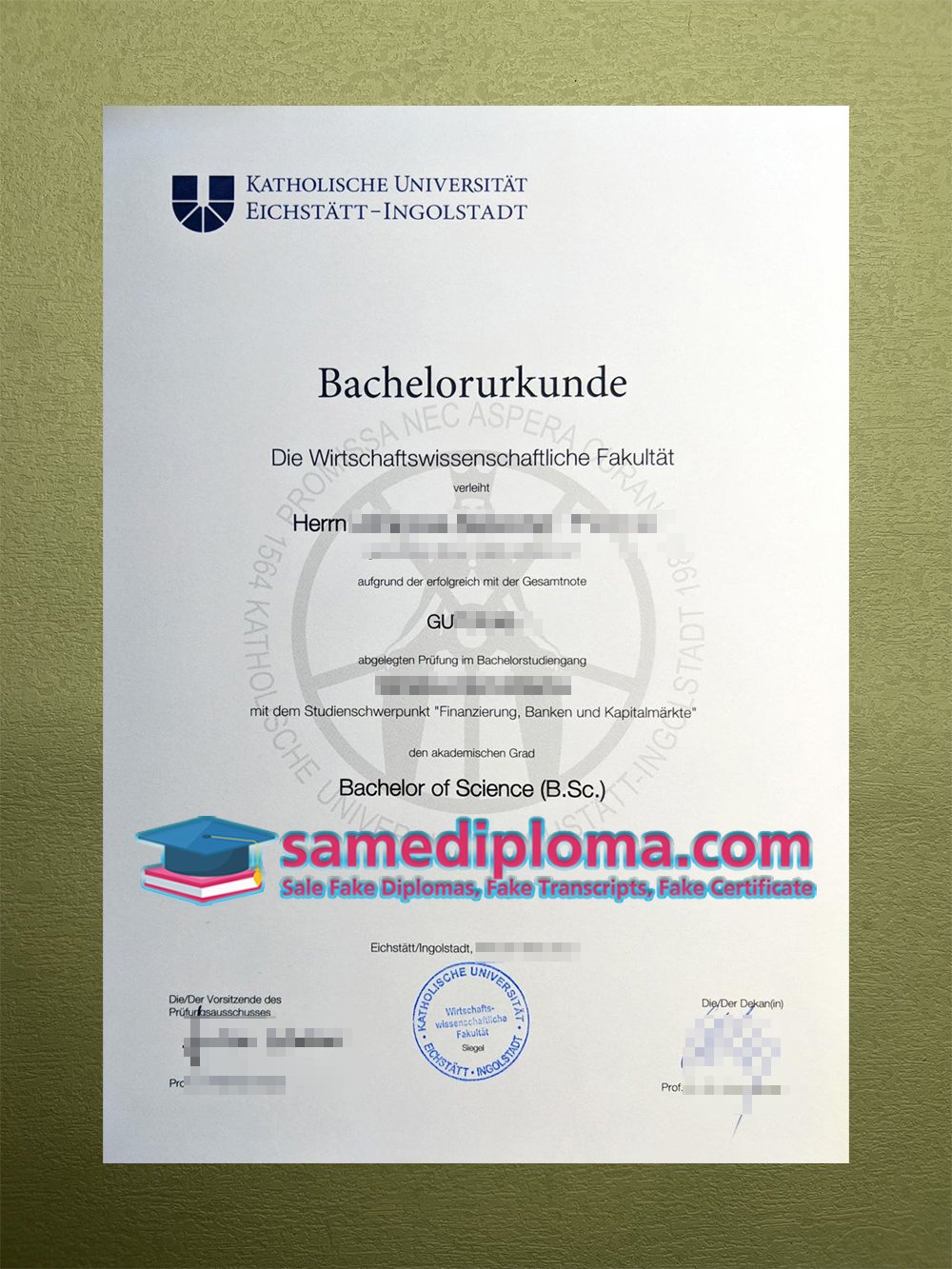
KU’s graduation guidance lists a final academic record, a degree certificate, and a diploma supplement with a transcript of records. The university normally provides these in German and English, subject to the examination regulations that apply to the programme.
For first-time issuance, students must complete the required modules and final thesis. Their grades must also appear fully in KU.Campus. They then use the application form for their programme and submit it through the Examinations Office’s contact form.
KU processes these applications in order of receipt. An incomplete application can extend the wait, so checking the form before submission matters. KU graduation document guidance
Before requesting several documents, ask the recipient exactly what it accepts. This can help you avoid paying for replacements you do not need.
How to Request a Replacement Katholische Universität Urkunde
If you have lost your graduation documents, KU provides an official duplicate procedure. Graduates submit a written request to the Examinations Office, together with a copy of their identity document.
At the time of checking, the university lists a fee of €15 for each duplicate certificate, final academic record, diploma supplement or transcript. Postage costs apply separately. Check the current instructions before applying.
The university provides a specific replacement request form. Use that form to identify the document you need and follow its submission requirements. KU replacement document service
It helps to gather your details before starting. Keep your student number, programme title and graduation year nearby. If you retain a scan of the missing document, refer to it when describing your request.
Also check your delivery details carefully. Include any information the form requires for an overseas address. If you face an application deadline, explain that date clearly and ask what timing the office can confirm.
Preparing Older Records for an Enquiry
A graduate who left university many years ago may have only part of the original paperwork. Begin with what you can establish confidently.
Create a short record of your attendance dates, the name you used during study and the qualification you completed. Add your former student number if you still have it. Then list the specific documents you have lost or need clarified.
Separate confirmed details from approximate dates. This makes your enquiry easier to understand and gives staff a clearer basis for locating the relevant record.
Finally, retain a copy of your completed request and the university’s response. When your replacement arrives, check the personal information and award details promptly. Keeping the correspondence alongside your academic records will make future document requests easier to manage.