TasTAFE Diploma: What It Shows About Your Skills and Career Path
A TasTAFE diploma can help you explain your training to an employer, support an application for further study, or document an achievement that took considerable effort. Its usefulness depends on the qualification you completed and the purpose for which you present it. When comparing Australian diplomas and transcripts, begin with the course title and supporting results rather than the appearance of the certificate.
For someone planning their next career move, the important question is practical: what will the receiving organization learn from this document? A qualification provides evidence of completed learning. Your work examples, experience and the requirements of a particular role add the rest of the picture.
TasTAFE Offers More Than One Qualification Level
TasTAFE describes itself as Tasmania’s largest public vocational education and training provider. Its qualifications range from Certificate I to Advanced Diploma, alongside short courses and skill sets.
That range matters when discussing a “college diploma.” The phrase may work as a broad search term, but it does not identify every award available through the institution. Use the exact qualification name when writing a CV, requesting records or asking about admission to another course.
For example, TasTAFE’s apprenticeship and traineeship listings include the Certificate III in Carpentry. Calling that award a diploma would change the description of the qualification, even though both belong within vocational education.
Choose a course by its content and intended outcome. A more advanced-sounding title does not automatically make a program the right route into your chosen occupation. Ask the course team how the training relates to your goal before comparing qualification names.
What Your Diploma Contributes to a Job Application
A diploma gives your application a specific educational reference point. It identifies an achievement that an employer can consider alongside the position’s selection criteria. However, the title alone may leave important questions unanswered.
Imagine applying for a role that asks for planning, communication and problem-solving skills. Listing your qualification establishes your educational background. Describing a relevant assessment or workplace project helps show how you applied what you learned.
You might explain the task, your responsibility, the steps you took and the outcome. Keep the example accurate, and distinguish classroom exercises from paid employment or placement experience.
This approach gives the reader something concrete to assess. It also helps you prepare for interviews, where an employer may ask how you would handle a practical situation.
A useful application therefore connects three things: the qualification, the skills relevant to the vacancy, and evidence of how you have used those skills. Avoid expecting the certificate to communicate all three on its own.
Practical Training and Employment Are Separate Milestones
Vocational training can help you prepare for work, but completing a course does not guarantee an immediate job. Vacancies, location, experience and the employer’s requirements all influence what happens next.
When considering a TasTAFE course, ask about the practical components for that particular program. Find out whether it includes workshop activities, workplace learning, simulated tasks or other assessment arrangements. Avoid assuming that every course offers the same facilities or industry experience.
The distinction matters when you plan your time. Workplace activities may involve arrangements that differ from ordinary classroom attendance. Discuss those expectations with the course team before building a schedule around study, paid work or family commitments.
If your target occupation has additional entry requirements, ask the relevant employer or professional body what evidence it expects. Treat that enquiry as part of career planning.
You can then work backwards from an actual vacancy or career goal: identify the required qualification, compare the course content, and decide what additional experience you need to develop.
Using a TasTAFE Qualification Outside Tasmania
An application outside Tasmania benefits from clear documentation and precise questions. For an overseas employer or education provider, a familiar institution name may matter less than a clear explanation of the qualification and its content.
Do not assume that recognition in one setting establishes acceptance everywhere. Instead, ask the organization reviewing your application what documents it requires and how it assesses Australian vocational qualifications.
It may request the qualification certificate, results, course information or an explanation of relevant experience. Ask whether it needs documents directly from the institution, a particular certification process or a translation before arranging those services.
Keep employment, admission and other administrative requirements separate when making enquiries. Approval for one purpose does not answer every question connected with another.
For example, someone considering further study should contact the receiving institution about admission and credit. Someone applying for a job should focus on the employer’s evidence requirements. These are different decisions, even when both involve the same TasTAFE diploma.
Choose the Record That Answers the Question
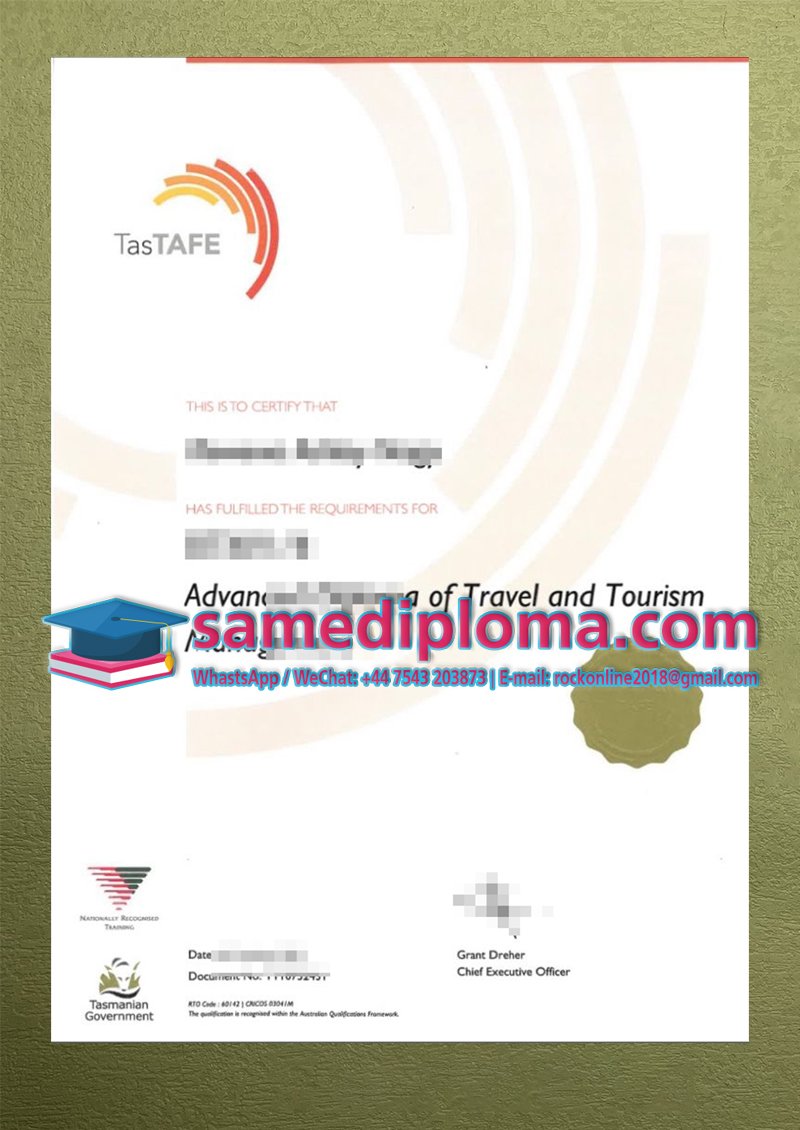
TasTAFE’s assessment information states that graduates of full qualifications receive a printed certificate with a Statement of Results covering the units undertaken. Skill sets, short courses and partial completions generally involve a Statement of Attainment, with delivery arrangements varying.
Those documents serve different purposes. If someone needs confirmation of the qualification, start with the award. If they need to understand the units you completed, the accompanying results may provide the detail they are seeking.
Read the request carefully before sending your entire collection of records. A concise submission that answers the question is easier to review than several unexplained attachments.
When your document contains a mistake, ask TasTAFE how to correct the record. If your name has changed, explain the situation and ask what supporting information the institution requires. Avoid editing an official file yourself.
Keep the original documents together and maintain a separate copy for routine reference. This makes it easier to respond consistently when several organizations ask about your studies.
Lost Paperwork, Digital Access and Display Copies
For missing records, TasTAFE directs graduates to the relevant administration staff or its reissue request form. At the time of checking in October 2026, that form lists AUD 30 for a replacement certificate or diploma, AUD 50 for a pre-1978 award, and AUD 15 for a Statement of Attainment.
Confirm the current charge before submitting a request. The form asks applicants to allow three to five working days for processing; treat delivery time as a separate question.
Digital access also needs a date check. TasTAFE’s assessment page describes My eQuals access as a 2027 arrangement. In October 2026, graduates should ask which options are currently available rather than assume every credential already appears there.
A replica diploma has a different purpose. A clearly marked non-official copy may serve as a display item or theatrical prop, but it does not create an academic record. For employment or further study, obtain the evidence the recipient requires through the appropriate official route.
Make Your Qualification Easier to Understand
Before your next application, prepare a short record of your studies. Include the exact award title, completion date and the details needed to locate your documents. Add two or three examples of relevant work or learning that you can explain confidently.
Then read the vacancy or admission requirements beside that record. Identify what your qualification already addresses and where the reader may need more information.
If the gap concerns paperwork, contact TasTAFE about the relevant document. If it concerns experience, consider what practical examples you can truthfully provide. If it concerns skills you have not yet developed, ask about suitable training.
For skills you already possess, TasTAFE offers a recognition process that can consider evidence from work, previous learning and other experience. Ask about assessment requirements rather than assuming that experience automatically converts into a qualification.
The next time you list your diploma, give it useful context: what you studied, what you learned to do, and one example that connects that learning to the opportunity in front of you.