University of Surrey Degree: Planning a Digital Graduation Keepsake
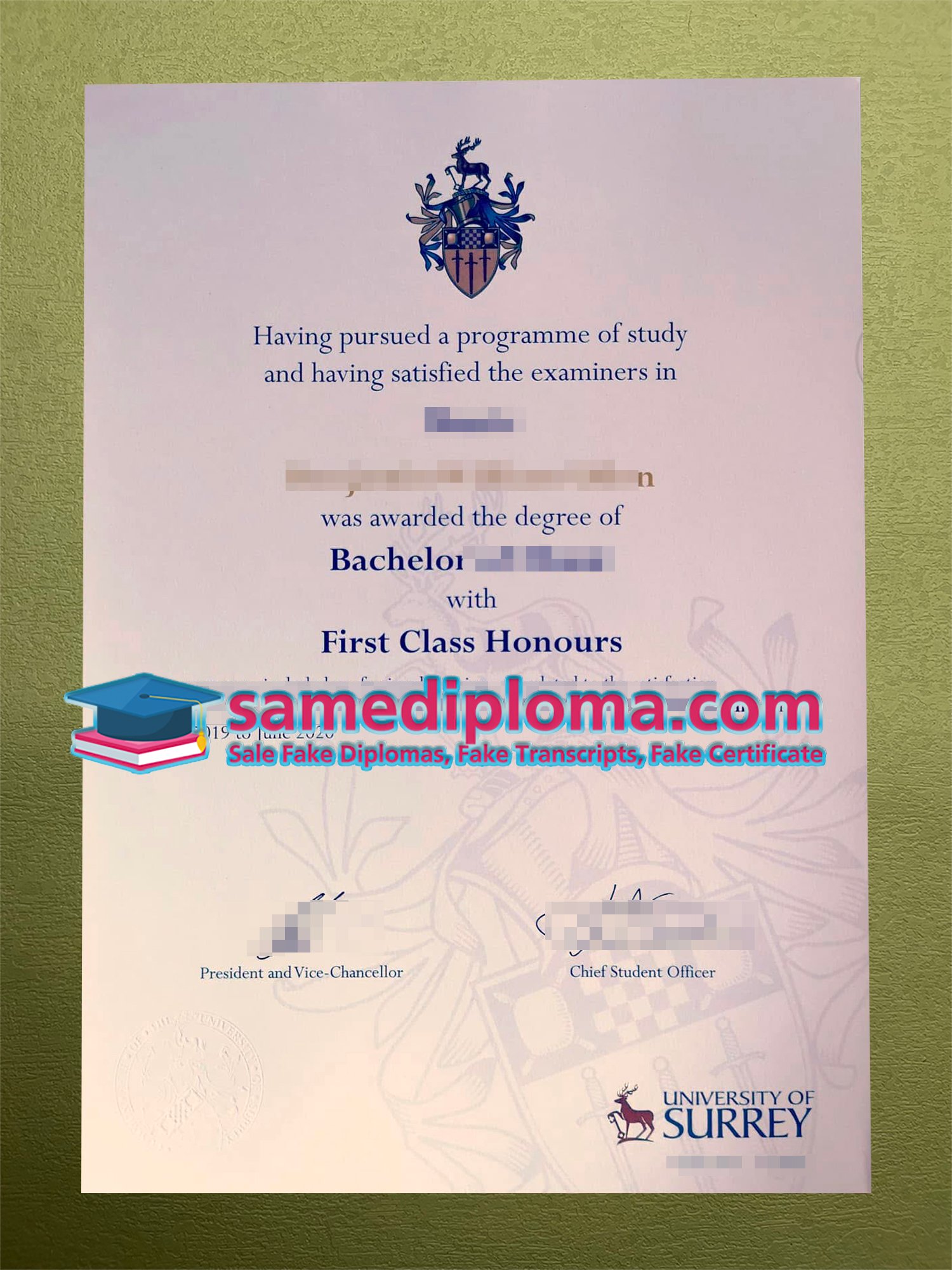
A University of Surrey degree marks an academic achievement. Order a University of Surrey Degree Diploma onlin. A digital graduation keepsake can celebrate that achievement in a different way: through an illustration, a personal message, or a design that recalls the experience of studying. Before commissioning anything online, decide which of those things you need. The university awards the qualification; a design service creates personal artwork.
That distinction should shape the entire project. An official University of Surrey diploma request belongs with the university. A clearly labelled keepsake can instead begin with a creative brief, a choice of format, and an agreement about what the designer will deliver. Getting those details right makes the process easier to understand and the finished result more useful.
A Surrey Story Begins with the Right Context
The University of Surrey received its Royal Charter on 9 September 1966. Its roots reach back to Battersea Polytechnic Institute, founded in 1891. This history connects the present university with an earlier commitment to practical and accessible education.
The institution’s move from Battersea to Guildford also gives different generations of alumni different points of reference. A recent graduate may associate Surrey with a particular campus space. An older family collection may contain material connected with an earlier name or location.
For a graduation design, use the period that belongs to the person’s actual experience. A current university anniversary does not automatically become the right theme for someone who graduated decades ago. Likewise, a historical detail should support the story rather than appear simply because it sounds impressive.
Surrey’s emphasis on professional experience provides another possible angle. For someone who completed a placement, a project or workplace experience may have shaped their studies. Include that connection only when it genuinely belongs to the recipient.
Choose the Digital Product Before Discussing Appearance
“Electronic version” can mean several things. A preview for approval, a finished image for personal sharing, and a file for professional printing have different purposes. Ask the provider to identify the intended deliverable before discussing decorative details.
For example, a design for a phone screen may need a different composition from a wide print. A social image should remain readable at a small size. A wall display may allow a longer dedication and more space around the illustration.
A printable PDF and a JPEG image are also different deliverables. Neither format, by itself, guarantees a particular level of quality. The dimensions, source images, export settings, and intended use all matter.
Decide whether you need only a digital file or a physical item as well. A digital-only order does not automatically include printing, a frame, or delivery. Clear wording at this stage prevents the preview from creating expectations that the quotation does not cover.
Build the Design Around a Specific Experience
The most useful brief explains what the artwork should celebrate. That might be completing a challenging course, returning to study, or reaching a long-planned personal milestone. The more specific the purpose, the less the design needs generic graduation language.
A Surrey-themed print could pair an original illustration with a short dedication. Alternatively, a digital memory page might bring together a photograph and a few lines about a meaningful project. These are possible approaches, rather than descriptions of existing customer orders.
Use photographs you own or have permission to reproduce. If another person appears in an image, check whether they are comfortable with the intended use. A private family gift and a public sample gallery raise different expectations.
Keep academic wording accurate. A personal message can refer to a real field of study without claiming to issue a degree. There is no need to reproduce university signatures, seals, or verification features to make the design feel connected to the occasion.
Agree on What Digital Editing Includes
A digital editing request should describe the change rather than simply ask for a document to look “more real.” For personal artwork, useful changes might include improving contrast, adjusting spacing, replacing a photograph, or correcting the wording of a dedication.
Work on an authorised scan has a narrower purpose. A clearer crop or careful colour adjustment can improve readability without changing what the original records. Keep an untouched source file so that later editing does not erase the original reference.
Faded or missing information needs particular care. Improving an image is different from inventing text that nobody can verify. If a section is unreadable, record that limitation instead of silently filling it with a guess.
Do not change names, grades, qualifications, or award dates to make an academic record say something different. If an official document contains an error, contact the university. A private editing service cannot correct the institution’s underlying record.
For historical display work, any newly created presentation should remain clearly distinguishable from the original document. A label describing it as a non-official display copy helps preserve that distinction.
Review a Proof with Its Final Use in Mind
A preview is a decision point. It allows you to check the message, composition, and intended format before the provider finishes the work. Treat it as an opportunity to resolve questions rather than a quick formality.
First, read names and dates independently of the design. Familiar words can be surprisingly easy to overlook when the overall image looks attractive. Then check the dedication for spelling, punctuation, and unintended changes in meaning.
Next, examine the layout at a realistic viewing size. A screen-filling preview can hide problems that become obvious on a phone or inside a small frame. The smallest text should remain legible in the intended setting.
Finally, check the visible description of the item. A graduation keepsake should identify itself as non-official within the artwork, not only in the accompanying webpage. Make sure that wording will remain visible after cropping or framing.
How Long Does a Digital Design Take?
A useful turnaround estimate explains both its starting point and its endpoint. Does the schedule begin when the enquiry arrives, when the brief is complete, or after payment? Does it end with the first preview or the approved final file?
Those distinctions matter because a first draft does not necessarily complete the project. A change to the wording may take less work than replacing the entire composition. Ask how revisions affect the proposed schedule before agreeing to a deadline.
Printing and shipping require separate estimates when a physical item forms part of the order. Digital approval does not mean a print is ready for dispatch. Equally, a dispatch date does not guarantee arrival on a particular day.
There is no confirmed production promise for this specific project. Discuss the required date, the agreed deliverables, and any remaining decisions with the provider. An explicit schedule is more useful than an unsupported claim of instant completion.
Keep the Final Files Organised
After approval, check that the delivered files match the agreement. Open each one and confirm that the wording and composition match the approved preview. If you ordered different formats, make sure each serves the purpose discussed.
Keep the final version separate from drafts. A clear filename and date can help avoid printing an earlier preview by mistake. Store the original photographs and any authorised source scans separately from edited copies.
For a public example, create a version that removes private information and retains the non-official label. A sample should demonstrate the artwork without exposing someone’s academic identifiers or implying university endorsement.
A University of Surrey degree and a commissioned graduation design fulfil different roles. Once the purpose is clear, the creative decisions become more straightforward: choose the message, define the format, review the proof, and confirm the files you need. The result can be personal and useful without pretending to be an academic credential.