Le Cordon Bleu Certificate and Diploma: Format, Meaning and Visual Differences
When people search for a Le Cordon Bleu certificate or a Le Cordon Bleu diploma, they are often looking for more than the name of the school.
They also want to understand what kind of qualification it is, what the document may look like, and why two Le Cordon Bleu documents do not always appear exactly the same.
That question makes sense.
Le Cordon Bleu is an internationally known culinary and hospitality education brand, and its programs can vary by campus, study level and training focus.
As a result, the certificate and the diploma are not always identical in title, purpose or visual presentation.
Certificate and Diploma Are Not Always the Same Level
The first thing to understand is that a certificate and a diploma do not necessarily represent the same type of academic or professional outcome.
In many education systems, a certificate is often linked to a shorter or more focused course.
A diploma usually suggests a broader or more advanced program with more substantial training.
At Le Cordon Bleu, this distinction can matter because students may complete different kinds of culinary, pastry, bakery or hospitality pathways.
Some programs are shorter and skill-focused.
Others are more structured and extensive.
That difference in study path can also influence how the final document is presented.
Why People Start Comparing the Documents
In practice, many people do not begin by comparing course structures.
They begin by comparing the paper itself.
Someone may have seen a Le Cordon Bleu certificate from one year and a Le Cordon Bleu diploma from another.
Another person may notice that one document is horizontal while the other is vertical.
At that point, the natural question becomes:
Why do they look different if they come from the same institution?
That is exactly where visual comparison becomes useful.
A Useful Visual Difference: One Horizontal, One Vertical
From the document perspective you mentioned, one of the clearest differences is the orientation.
In the examples being discussed:
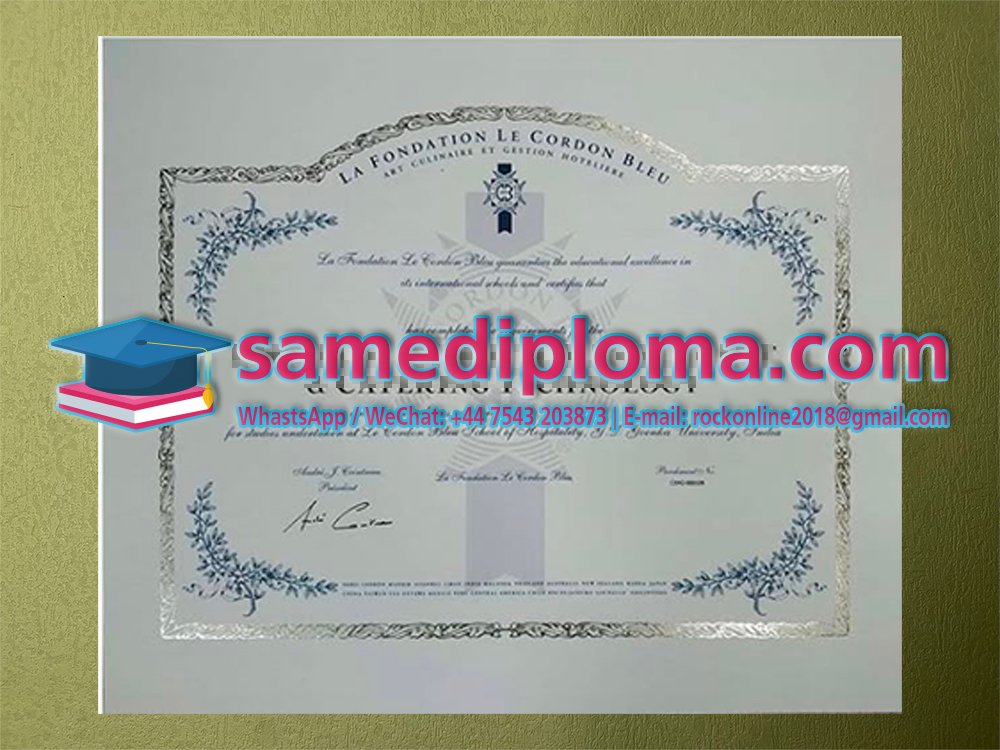
- the Le Cordon Bleu diploma appears in a horizontal format;
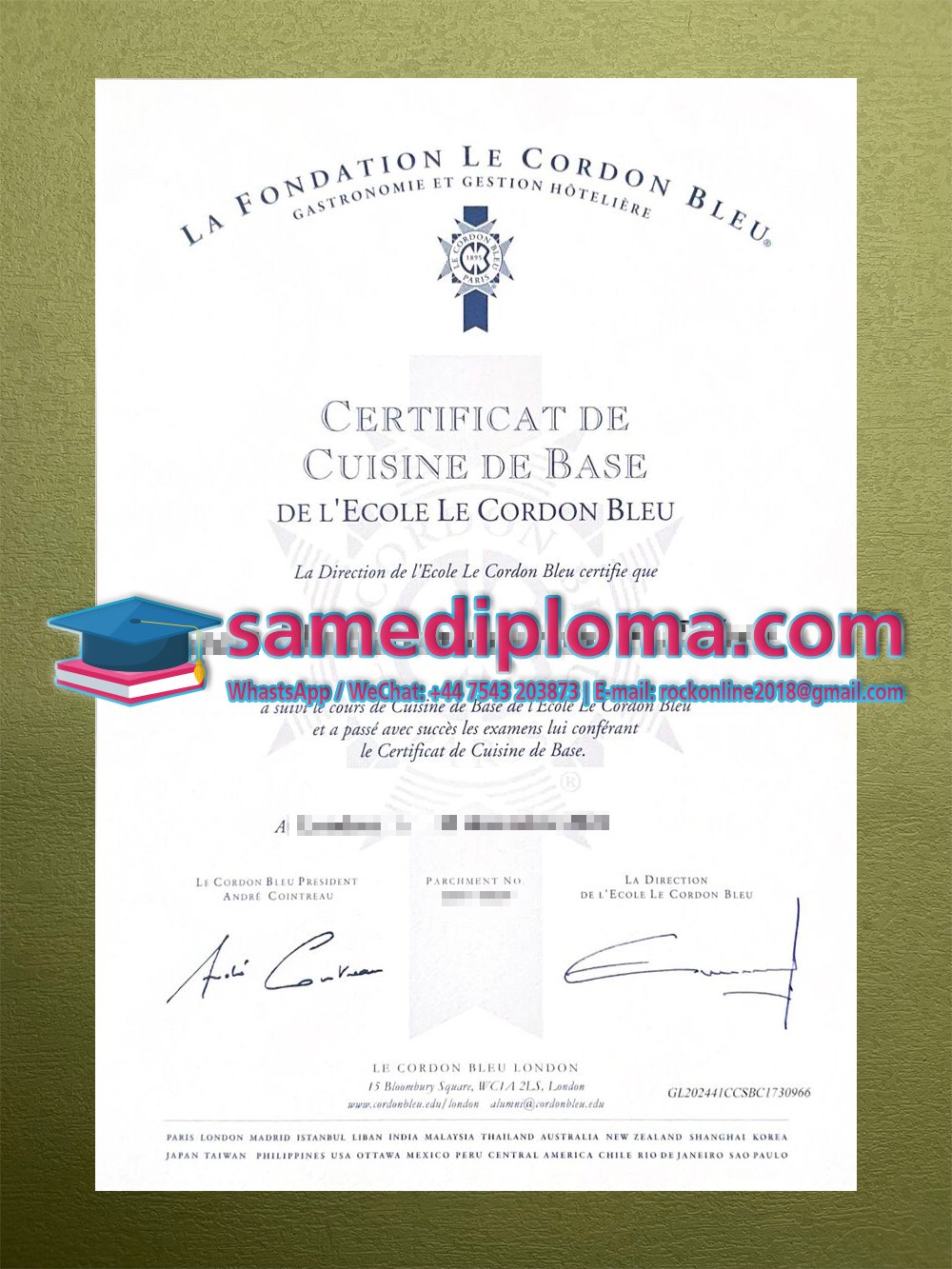
- the Le Cordon Bleu certificate appears in a vertical format.
That difference alone makes the two documents easy to distinguish at a glance.
A horizontal diploma often feels more formal and ceremonial.
A vertical certificate can appear more compact and direct.
Of course, this should not be treated as a rule that applies to every campus and every year forever.
But as an observed document difference, it is meaningful.
It helps explain why two Le Cordon Bleu awards may not look interchangeable even when both carry the same brand name.
Year and Location Can Change the Layout
Another important point is that year and location can both affect document appearance.
This is something people often overlook.
They may compare two Le Cordon Bleu documents and assume one must be wrong simply because the layout is not identical.
But educational documents often evolve over time.
A document issued several years earlier may use a different layout, spacing, seal placement, typeface or wording than a newer one.
The same is true across locations.
Le Cordon Bleu operates through different campuses and training environments, and a document issued in one city or country may not be formatted exactly the same way as one issued somewhere else.
That means a Le Cordon Bleu certificate from one location and a Le Cordon Bleu diploma from another may differ in more than just orientation.
They may also differ in:
- placement of the name;
- title positioning;
- wording style;
- date format;
- signature layout;
- school location line;
- decorative elements.
The Layout Difference Tells a Story
This is what makes document comparison more interesting than it first appears.
The layout difference is not only a design issue.
It often reflects the context behind the award.
A vertical certificate may suggest a shorter or more targeted course.
A horizontal diploma may reflect a fuller or more formal program outcome.
Meanwhile, the year and campus can leave their own visual marks on the document.
So when someone compares a certificate and a diploma, they are often comparing different study purposes, different times and different issuing contexts all at once.
That is why the documents should not be judged only by appearance.
The appearance makes more sense when placed in context.
Le Cordon Bleu Is Known for Specialized Training
Another reason this distinction matters is that Le Cordon Bleu is not a general university with one standard degree system.
It is widely associated with culinary arts, pastry, bakery, hospitality and related fields.
Students do not all follow the same route.
Some focus on cuisine.
Others study pâtisserie.
Some complete short-term training.
Others take more complete professional programs.
That variety naturally leads to different award types.
And once the award types differ, the final documents often differ too.
Why Document Variations Are Normal
People sometimes worry too quickly when two documents are not identical.
But variation is normal.
Educational institutions may update design features over time.
They may revise branding, document size, layout balance, wording or security elements.
They may also make small location-based adjustments.
This is why the phrase Le Cordon Bleu diploma should not automatically be understood as one single fixed document design.
The same applies to the Le Cordon Bleu certificate.
There can be more than one valid visual version, especially when different years and places are involved.
Certificate, Diploma and Academic Record
It is also useful to separate the visible award from the broader academic record.
A certificate or diploma is the final recognition document.
It shows that a particular course or program was completed.
But in many cases, additional records may exist as well.
These can include transcripts, grade records or completion confirmations depending on the institution and program.
That means the visible certificate or diploma is only one part of the student’s training history.
A More Practical Way to Compare Them
If someone wants to compare a Le Cordon Bleu certificate and a Le Cordon Bleu diploma, the most practical questions are:
- Is the document a certificate or a diploma?
- Is it horizontal or vertical?
- What year was it issued?
- Which campus or location is listed?
- Does the layout match the style of that type of award?
- Are the wording and formatting consistent with the issuing period?
Once those questions are asked, the comparison becomes much clearer.
Instead of just saying “these two documents look different,” it becomes possible to explain why they look different.
Final Thoughts
A Le Cordon Bleu certificate and a Le Cordon Bleu diploma should not be expected to look exactly the same.
In the examples discussed here, one visible distinction is especially clear:
the diploma is presented in a horizontal format, while the certificate appears in a vertical format.
Beyond that, differences in year and location can also lead to noticeable changes in layout, wording and visual style.
That does not automatically mean anything is wrong.
It usually means the documents come from different contexts.
And that is the most useful way to understand them:
not just as two papers with the same brand name, but as two different awards shaped by program type, issue date and issuing location.